

 by Elizabeth Bowery
Does Forming an LLC Protect Members from Personal Liability?
Business founders often form a Limited Liability Company (LLC), expecting the LLC structure to shield them from personal liability for the company’s debts and obligations. While Maryland law does provide meaningful liability protection for an LLC member, it does not categorically prevent the member from being held liable in an individual capacity.
Under Maryland law, an LLC member generally is not personally liable for the obligations of the company solely because they are a member. In most circumstances, creditors seeking to collect a business debt must look to the LLC’s assets, not the member’s personal assets. That protection, however, is limited to liability arising from ownership status alone and does not extend to liability based on an individual’s own conduct or independent legal obligations.
As a result, an LLC member may still face personal liability in several situations, such as:
- Signing a personal guarantee of company debt
- Liability imposed directly by statute
- The member’s own tortious conduct (for example, fraud).
The LLC’s liability shield is strongest when the company is operated as a separate legal entity serving a legitimate business purpose. Maryland courts generally pierce the LLC veil only to prevent fraud or enforce a paramount equity. In evaluating whether that standard is met, courts may consider factors such as the LLC member treating the LLC as an extension of personal finances or using the LLC to facilitate unlawful conduct. These practices can undermine the liability framework and weaken the argument that the LLC should shield the LLC member from personal exposure.
Understanding the scope and limits of LLC liability protection is a critical aspect of building and protecting a business. As business lawyers, we assist business owners at every stage of ownership, offering guidance in selecting the best entity, drafting customized governing documents, and providing ongoing business counsel.
 by David Hisle
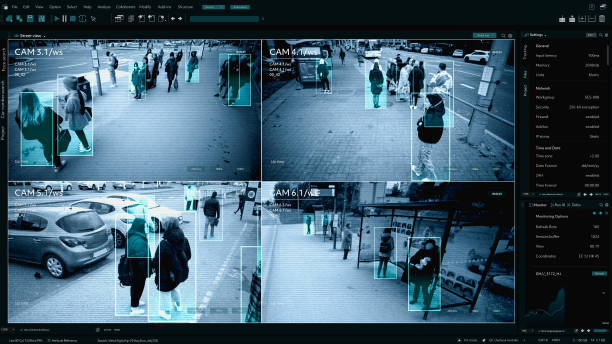
Understanding Maryland’s New Visual Surveillance Law
There is a new law in Maryland, since October 2025, which substantially revised our State’s criminal statute governing invasive visual surveillance — especially as it applies to privacy in homes.
Under prior Maryland law, visual surveillance that involved a prurient intent was already prohibited using cameras or similar devices to observe individuals without consent, in physical spaces where they would reasonably expect privacy. The new law expands the definition of “private place” to include one’s residence or other places of private use or accommodation. This means that even if someone isn’t in a traditional “private place” (like a bathroom or locker room), the new law now protects private spaces such as homes where individuals have a reasonable expectation of privacy.
The new law also clarifies that non-consensual visual surveillance of a person’s private spaces using a camera is prohibited, regardless of where the individual is located — emphasizing the protection of personal privacy beyond just specific places.
The new law modernizes the statute to ensure that homes and similar private locations are recognized as protected spaces, and that a person’s reasonable expectation of privacy is upheld even when they are not in the previously narrowly defined private areas.
By affirming that unlawful visual surveillance of private areas is prohibited regardless of their location, this new law makes it easier for prosecutors to pursue charges in a wider range of circumstances when someone uses technology to invade a person’s privacy.
